
Video 1: Welcome to Movin and Removin
VIDEO SCRIPT 2 — Introducing the Role: Remote Sales & Operations Coordinator
Welcome to Movin and Removin — we’re excited to have you on the team.
Your role as a Remote Sales & Operations Coordinator involves several responsibilities, but the overall process is simple and structured. You’ll serve as a key connection between our clients, our systems, and our moving crews.
You will be responsible for answering calls, responding to quote requests, and following up with clients who inquire about our services. These requests may be for local moves, long-distance moves, office or commercial moves, and junk removal.
Your first priority is to make contact with the client and gather the information needed to understand the job. This is where the sales aspect of the role comes in — your goal is to clearly explain our services, answer questions, and close the job once expectations are aligned.
After the call, you will enter all job details into Monday.com, which we use to organize and manage our work. Accuracy matters. The information you enter helps ensure the job is prepared correctly and scheduled properly.
You’ll also help coordinate schedules and keep job information up to date, making sure everything is clear for the team before moving day.
When this process is done correctly, it creates a smoother experience for both our clients and our crew.
In short, you help turn incoming inquiries into organized, well-executed moves.
VIDEO SCRIPT 3 — Handling Client Calls & Quotes
Clients typically reach out to Movin and Removin in two ways: by calling us directly or by submitting an online quote.
Depending on how the client inquires, you may already have some information before speaking with them or you may have very little. If a client submits a quote online, you may see details like their name, email, pickup and drop-off cities, type of move, and preferred move date. If they call in first or reach out another way, you may need to gather everything from scratch.
Your job is to confirm any existing information and collect whatever is missing so we can provide an accurate quote and prepare properly for the move.
On every call, your goal is to gather clear, complete details about the job. Some of the most important things you’ll want to collect are:
- Client contact information (name, phone number, and email)
- Move date and preferred time
- Pickup and drop-off locations
- Type of move (local, long-distance, office, or junk removal)
- Items being moved
- Move logistics, such as stairs or elevator access
- Assembly or disassembly needs, like beds, furniture, or wall-mounted items
Once you have the details, your next responsibility is to close the sale. This means answering questions, setting expectations, and helping the client feel confident moving forward so the job can be scheduled.
After the client is booked, you’ll enter all job details into Monday.com. This is where organization matters most. The information you enter is what our team relies on to prepare the right equipment, tools, and crew for moving day.
Having accurate information upfront allows our crew to arrive prepared, informed, and ready to work, which leads to smoother jobs and a better experience for everyone involved.
VIDEO SCRIPT 4 — Using Monday.com to Track Leads and JobS
After every client interaction, the next step is documenting the lead in Monday.com. This applies whether the client books with us or not.
Monday.com is where we keep all lead and job information in one place so the entire team can stay organized and aligned. It is not only used for confirmed jobs, but also for tracking calls, quote requests, follow-ups, and outcomes.
After every call, you will log the interaction in Monday.com.
This includes situations where:
- The client is still considering their options
- The client does not yet have all the details of their move
- The client decides not to move forward with us
- You attempted to call but were unable to reach them
In each case, your responsibility is to document what happened and update the lead accordingly. This helps ensure there is a clear record of communication and prevents leads from being forgotten or duplicated.
Consistent documentation allows the team to see the full history of each lead and understand the current status at a glance.
In short, every client interaction gets documented. Using Monday.com correctly keeps our operation organized, improves follow-ups, and helps both our team and our clients have a smoother experience.
VIDEO SCRIPT 5 — Scheduling Crew and Preparing for Moves
Once a client has confirmed their move and all information is documented in Monday.com, the next step is to make sure the job is properly staffed and ready. This is one of the most important responsibilities because without a crew, a move cannot happen.
As the Remote Sales & Operations Coordinator, you’ll reach out to our movers to check their availability for the day of the move. Movers are ranked by priority, so you will start from the top and contact them in order.
The best way to reach the crew is usually texting, simply asking if they are available to work. If the job is very soon or timing is critical, a call may be necessary to get a faster response. Once availability is confirmed, you will input the crew assignments into Monday.com, so everyone knows who is assigned to each job and their responsibilities.
Your role also includes coordinating supplies and scheduling the moving truck. Making these preparations ahead of time ensures the crew knows exactly what to do and where to go on moving day.
Finally, you will reach out to both the crew and the client before the move to confirm everything is still on track. Since clients sometimes book weeks in advance, it’s important to double-check availability, confirm details, and make sure everyone is prepared.
In short, your job is to keep everything running smoothly so our crew can show up ready, and the client experiences a seamless moving day. Proper staffing is critical if jobs aren’t staffed as soon as they are booked, moves cannot happen, and the client’s experience is negatively affected.
VIDEO SCRIPT 6 — Coordinating Truck and Supplies PickupS
We often rent trucks through U-Haul, and scheduling usually falls on you. This is simple but critical, because the truck must be rented before the move so the movers can pick it up on the day of the job without issues. Renting the truck is straightforward and can be done through the U-Haul app.
There are a few things to keep in mind. U-Haul charges per mile, so the more miles driven, the higher the cost. To reduce expenses, it’s your responsibility to look at the pickup and drop-off locations for the move and choose the closest U-Haul location to the job. We’ll cover more details later, but in most cases, the U-Haul will be closest to the pickup address.
VIDEO SCRIPT 7 — Day-of Move Support
As the main point of contact with the client, it’s important to be available during the day of the move. In a perfect scenario, moves go smoothly and there’s little for you to do. However, sometimes issues or questions may arise from either the movers or the client.
Common situations you may be contacted for include:
- Questions or issues with picking up supplies
- Problems with the rented truck
- Questions about where to go or move details
- Last-minute changes, cancellations, or a mover not showing up
You are the person with the most knowledge of the job because you gathered the details and spoke with the client. The movers only know what you communicated or documented in Monday.com, so they may turn to you if anything is unclear.
Clients may also reach out with questions, concerns, or changes to their move plans. Your role is to provide clarity and support, ensuring the move stays on track.
Even if nothing happens, it’s important to stay aware and ready, because unexpected situations can occur. By being available to both the crew and the client, you help keep the move organized and ensure a seamless experience for everyone involved.
VIDEO SCRIPT 8 — During and After the MovE
During the move, your role is to stay aware and make sure everything is running smoothly. Maintain periodic contact with the crew to check for any delays, questions, or issues, and ensure the move is on track time-wise.
After the crew has completed the move, it’s important to check in with them to confirm everything went as planned, especially if you haven’t been in touch during the move. You should also reach out to the client to make sure the move went well, thank them for using our services, and let them know we’d be happy to help them again in the future. This is also a good opportunity to remind them to leave a review if they had a positive experience.
Once you’ve confirmed everything with both the crew and the client, the final step is to update the move status in Monday.com from “in progress/confirmed” to completed. This is important because:
- It moves the job to the completed jobs section, keeping our system organized
- It triggers an automated email to the client with a link to leave a review
After marking the move as complete and confirming everything went well, your work for that move is done. This step ensures the entire process is wrapped up efficiently and professionally, leaving both the client and our crew satisfied.
VIDEO SCRIPT 9 — Sales and Lead Follow-Up
On client calls, it’s important to gather key details about the job, but it’s just as critical to close the deal. How you handle the call can make the difference between a client choosing Movin and Removin or going with someone else. Sales are what drive our company, so your ability to both collect information and skillfully close jobs directly impacts our success.
You will not convert every job on the first call. Clients may not be ready due to unknowns like their move date, destination, or other factors. Sometimes clients don’t answer initially, which is why follow-up is extremely important and a key responsibility of your role.
When tracking multiple leads, it can become confusing to remember the status of each one. This is where documenting every call, even if the client didn’t answer, becomes critical. Keeping detailed records in Monday.com makes your job easier, ensures no leads slip through the cracks, and helps you stay organized while generating more jobs for the company.
VIDEO SCRIPT 10 — Apartment Outreach and Relationship Building
Another important part of your role is apartment outreach and maintaining relationships with leasing offices. A large part of how we get jobs is through apartments referring residents who need help moving.
Our sales reps usually visit local apartments, real estate offices, and sometimes storage units to hand out flyers and marketing materials. Your responsibility is to take the contact information gathered such as apartment name, address, leasing agent name, phone number, and email and input it into Monday.com. This keeps our records organized and up-to-date.
Beyond data entry, you’ll also follow up with apartments. Using the apartment list, you’ll call leasing agents to remind them of our services and ask if they have any upcoming moves or opportunities where we can help. These calls aren’t cold calls, they’re about building relationships.
Calling several apartments at once can be very effective, helping leasing agents remember our company and increasing the likelihood they will refer residents to us. Over time, maintaining these relationships leads to recurring business and more jobs for our company.
VIDEO SCRIPT 11— Example Client Call
This video shows one example of a client call. Every call will be different, and conversations will not always follow the exact same order. The goal is not to memorize a script, but to understand what information must be collected and how to guide the call naturally.
While the flow may change depending on the client, there is a standard structure to every call. When a client submits an online quote, you will usually already have their name, phone number, move date, and pickup/drop-off cities. If the client did not submit a quote and you don’t have this information, you’ll need to gather it during the conversation.
Early in the call, your priority is to confirm the exact addresses, preferred date, and time so the move can be scheduled correctly.
As the conversation continues, you should gather details about the items being moved and the logistics of the job. This includes things like:
The items the client has and the general size or quantity
Assembly or disassembly needs
Stairs, elevators, or first-floor access at either location
Truck access or parking situations at the pickup and drop-off locations
Any heavy or specialty items
The order in which you collect this information may change depending on the flow of the conversation, and that’s okay. What matters is that all required details are confirmed by the end of the call.
Pricing should be discussed toward the end of the call, once the client has confirmed their date, time, and locations. Before closing, always take a moment to reconfirm the key details so both you and the client are aligned.
VIDEO SCRIPT 12 — Client Call Breakdown
As stated before, every call will be different, but there are certain essential details you must always gather:
Key Information to gather on every call:
Client’s full name, phone number, and email
Referral source / how they heard about us
Date and time of the move
Pick-up and drop-off addresses, including unit numbers when available (not every client will know this, but capture it if possible)
General understanding of items being moved — size, quantity, including number of boxes
Any assembly / disassembly needs
Job logistics, including:
Stairs, elevator access, or floor level (is it first floor? if not, are there stairs or an elevator?)
Any heavy or unusually large items
Special requests
Gathering all of these details ensures the move can be planned accurately, executed safely, and quoted correctly.
VIDEO SCRIPT 13 — Understanding Phone Call Variations and Gathering Key Information
Every client is different, so every phone call will naturally flow differently. Calls should feel natural, and the more you take them, the easier they become. It’s important to focus on gathering key information, not memorizing a script.This ensures you have all the necessary details to provide an accurate quote and give the crew the information they need to execute the move efficiently. While there are key points to cover, the call should feel like a conversation, not a script.
VIDEO SCRIPT 14 — Leaving a voicemail
Sometimes you won’t be able to reach the client on the phone. They may not answer, or you might be following up on a lead. In these cases, it’s important to leave a clear and professional voicemail.
When leaving a voicemail, always introduce yourself and your company, explain why you’re calling, and give the client an easy way to call you back. Your message should communicate that you’re calling to help them and provide a reason for the call without sounding pushy.
Remember: even if the client doesn’t answer the first time, leaving a voicemail is crucial. Use it as an opportunity to build interest, convey professionalism, and encourage the client to call back.
VIDEO SCRIPT 15 — Monday.com Tutorial
VIDEO SCRIPT 16 — Arizona Areas Overview
Movin and Removin serves many cities throughout the Phoenix metro area, with Scottsdale as our home base and supply location. While moves can start and end anywhere within the valley, Scottsdale is used as a central reference point for understanding distance and drive time between cities.
Primary service areas include Scottsdale, Tempe, Phoenix, Mesa, Chandler, Gilbert, and Glendale, along with surrounding cities such as Paradise Valley, Fountain Hills, Cave Creek, Ahwatukee, Peoria, Goodyear, and Queen Creek. We also serve farther cities including Surprise, Tucson, Prescott, Flagstaff, San Tan Valley, and Maricopa, which typically involve longer drives and more planning.
Being familiar with these cities and their general location and distance from one another allows you to:
Estimate move complexity more accurately
Quote with confidence
Ask smarter follow-up questions
Communicate clearly with clients
Build trust and credibility on calls
Avoid hesitation when hearing city names
Understanding the Arizona service area is a key part of this role and is essential for accurate quoting, scheduling, and client communication.
Overview of Arizona: Phoenix and Surrounding Areas
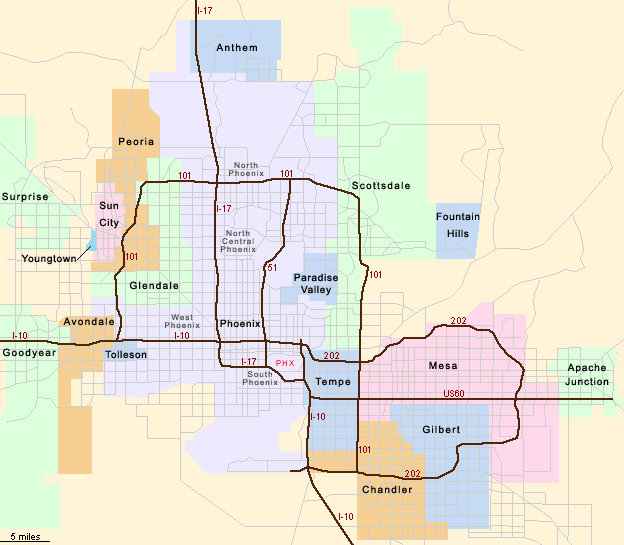
While we serve many locations throughout Arizona, this map illustrates a wide portion of our Greater Phoenix service area. The goal isn’t to memorize exact routes, but to understand the general layout and direction of cities in relation to one another.
Knowing which cities are east, west, north, or south of each other helps you quickly estimate distance and speak confidently on calls. For example, if a client says they’re moving out of Mesa and into Phoenix, you’ll know that Mesa is east of Phoenix, and the move will be heading west.
Having this general geographic awareness allows you to better understand move distances, ask smarter follow-up questions, and communicate clearly with both clients and crews.